
Table Of Content
- What Is ORM In Digital Marketing?
- What Is Exactly ORM In Digital Marketing?
- Why Is ORM Important in Digital Marketing?
- How Does ORM Work? (Step-by-Step Process)
- Types of ORM in Digital Marketing
- Most Common ORM Tools Used by Professionals
- Best ORM Strategies for Strong Online Reputation
- Key Benefits of ORM for Businesses
- Conclusion
In today’s highly competitive digital world, every brand wants to look trustworthy, credible, and customer-friendly. But with increasing online reviews, social media conversations, and public feedback, managing your online presence has become more important than ever. This is where ORM (Online Reputation Management) in digital marketing plays a powerful role.
If you’re wondering “What is online reputation management in digital marketing and why does it matter?”, this guide explains everything—definition, benefits, process, strategies, and best practices.
What Is exactly ORM in Digital Marketing?
ORM (Online Reputation Management) is the process of monitoring, improving, and maintaining a brand’s online image. It includes controlling how your business appears on Google, social media, review platforms, news sites, blogs, and anywhere customers talk about you.
In simple words:
👉 ORM is about shaping public perception and influencing what people find when they search for your business online.
It involves responding to reviews, managing negative feedback, promoting positive content, and ensuring your brand maintains a trustworthy digital identity.
Why Is ORM Important in Digital Marketing?
In the digital era, customers trust online reviews more than advertisements. A single negative comment can affect your brand’s credibility. Effective ORM helps you:
⭐ 1. Build Trust & Credibility
People prefer brands with positive reviews and strong online reputation. ORM ensures your business consistently looks reliable.
⭐ 2. Improve Google Presence
Positive content, reviews, and mentions boost search rankings and visibility.
Since ORM and SEO go hand-in-hand, businesses looking to improve their search rankings and online reputation can explore our SEO Services, designed to boost visibility and attract high-intent customers.
⭐ 3. Increase Sales & Conversions
Studies show that businesses with good online reviews generate more leads and better conversions.
⭐ 4. Protect Brand Image
ORM helps control the damage caused by false information, negative publicity, or competitor attacks.
⭐ 5. Enhance Customer Relationships
Quick responses to feedback show customers that you care.
How Does ORM Work? (Step-by-Step Process)
1. Monitoring Brand Mentions
Tools like Google Alerts, Mention, and Social Mention track every online conversation about your brand.
2. Managing Online Reviews
Replying to customer feedback on platforms like Google My Business, Facebook, TripAdvisor, Yelp, etc.
3. Encouraging Positive Reviews
Requesting satisfied customers to share their positive experiences online.
4. Handling Negative Feedback
Responding politely, understanding issues, and offering solutions to convert unhappy customers into loyal ones.
5. Promoting Positive Content
Publishing blogs, PR articles, testimonials, and success stories to push down negative content on Google.
6. Building Brand Authority
Highlighting expertise through consistent content marketing, social media activity, and community engagement.
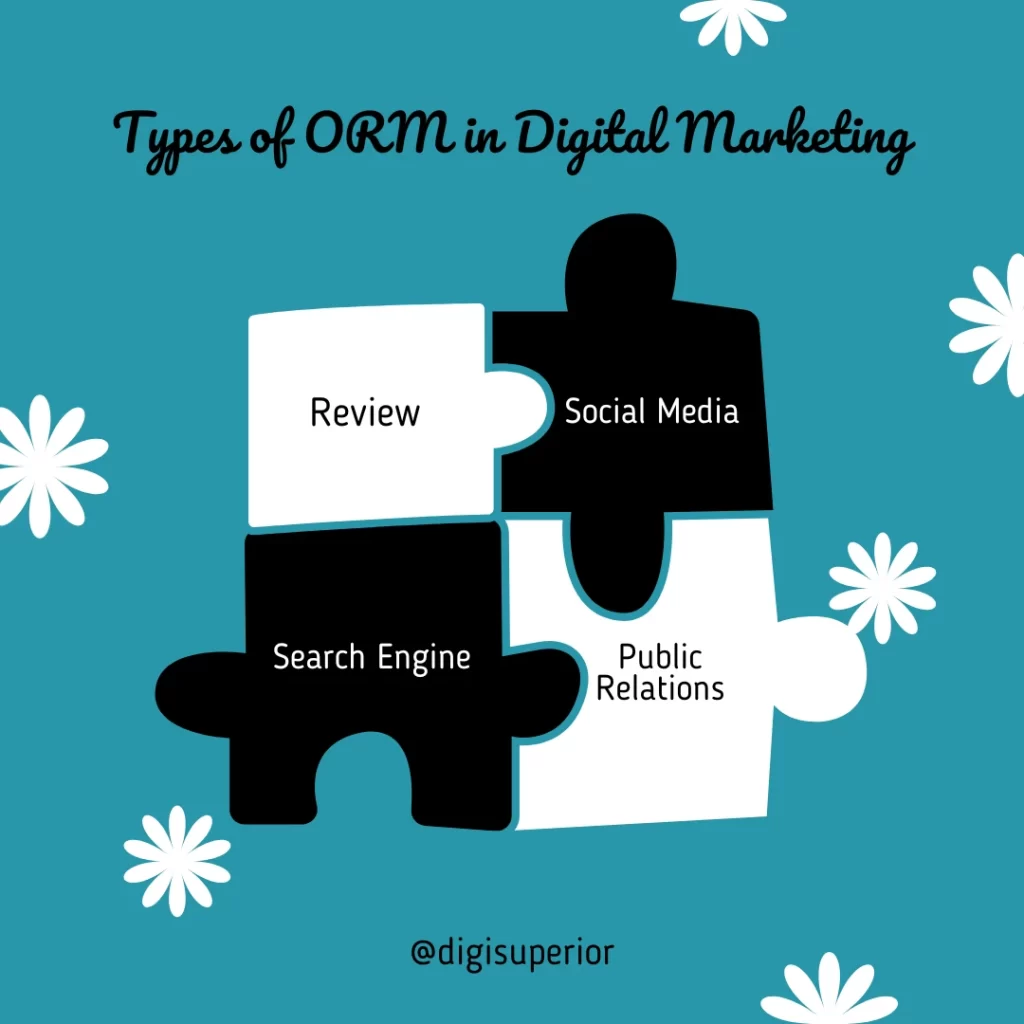
Types of ORM in Digital Marketing
1. Review Management
Managing and responding to reviews across online platforms.
2. Social Media Reputation Management
Handling comments, messages, DMs, and brand posts.
3. Search Engine Reputation Management
Improving positive search results and pushing down negative ones.
4. Public Relations (PR) Reputation
Using press releases, news articles, and influencer mentions to create trust.
Most Common ORM Tools Used by Professionals
✔ Google Alerts
✔ Mention
✔ Trustpilot
These tools help track online presence and understand customer sentiment.
Best ORM Strategies for Strong Online Reputation
1. Stay Active on Social Media
Engage with your audience regularly through posts, reels, stories, and comments.
2. Respond to Reviews Professionally
Always reply politely—even to negative reviews.
3. Encourage Happy Customers to Post Reviews
This naturally improves your ratings and online credibility.
4. Publish High-Quality Positive Content
Blogs, case studies, testimonials, and PR articles strengthen your brand’s reputation.
5. Fix Issues Internally
Work on genuine problems that customers point out.
6. Use SEO to Push Positive Content Higher
Well-optimized articles help rank positive content above negative results.
If you want professional help to improve your brand’s online presence, DigiSuperior digital marketing agency offers complete ORM and digital marketing solutions designed to build trust and credibility.
Key Benefits of ORM for Businesses
- Builds a strong brand presence
- Improves customer trust
- Enhances Google rankings
- Generates more business inquiries
- Reduces the impact of negative publicity
- Increases loyalty and credibility
Frequently Asked Questions (FAQ)
1. What is ORM in digital marketing?
ORM (Online Reputation Management) in digital marketing is the process of monitoring and improving how your brand appears online. It includes managing reviews, social media comments, search results, and public mentions to maintain a positive brand image.
2. Why is ORM important for businesses?
ORM helps build trust, credibility, and consumer confidence. A strong reputation attracts more customers, increases conversions, and prevents damage caused by negative reviews or bad publicity.
3. How does ORM work?
ORM works by tracking brand mentions, responding to customer reviews, promoting positive content, optimizing search results, and managing any negative information that may harm your reputation.
4. What is the difference between ORM and SEO?
SEO focuses on ranking your website higher on search engines, while ORM focuses on shaping how your brand is perceived online. SEO improves visibility; ORM improves credibility.
5. Can ORM remove negative reviews?
ORM doesn’t delete genuine reviews, but it helps address them professionally. It can also push down harmful search results and encourage positive reviews to improve your overall rating.
6. How long does online reputation management take?
The time depends on your current reputation. Improving a brand’s online presence usually takes 1–3 months for small improvements and 3–6 months for major reputation repairs.
7. Which tools are used for ORM?
Popular ORM tools include Google Alerts, Brand24, Hootsuite, Trustpilot, BirdEye, Mention, and Reputation.com. These tools monitor brand mentions and help manage online feedback.
8. Is ORM only for big brands?
No. Small businesses, freelancers, startups, and local companies also need ORM. Customers trust online reviews before choosing any service or product, so reputation matters for every business.
9. How does ORM help SEO rankings?
Positive reviews, brand mentions, and good customer interactions improve trust signals, which directly support SEO. High-rated brands often rank better on Google.
10. Can I manage ORM on my own?
Yes, but it requires consistent monitoring and expertise. Many businesses prefer agencies like DigiSuperior to manage ORM along with SEO and digital marketing strategies for better results.
Conclusion
Now that you know ORM meaning in marketing is, it’s clear that online reputation is not optional—it’s essential. Whether you’re a small business, a startup, or a large brand, ORM plays a crucial role in shaping how customers see you online.
By monitoring feedback, responding professionally, and promoting positive content, you can build a strong and trustworthy digital presence.